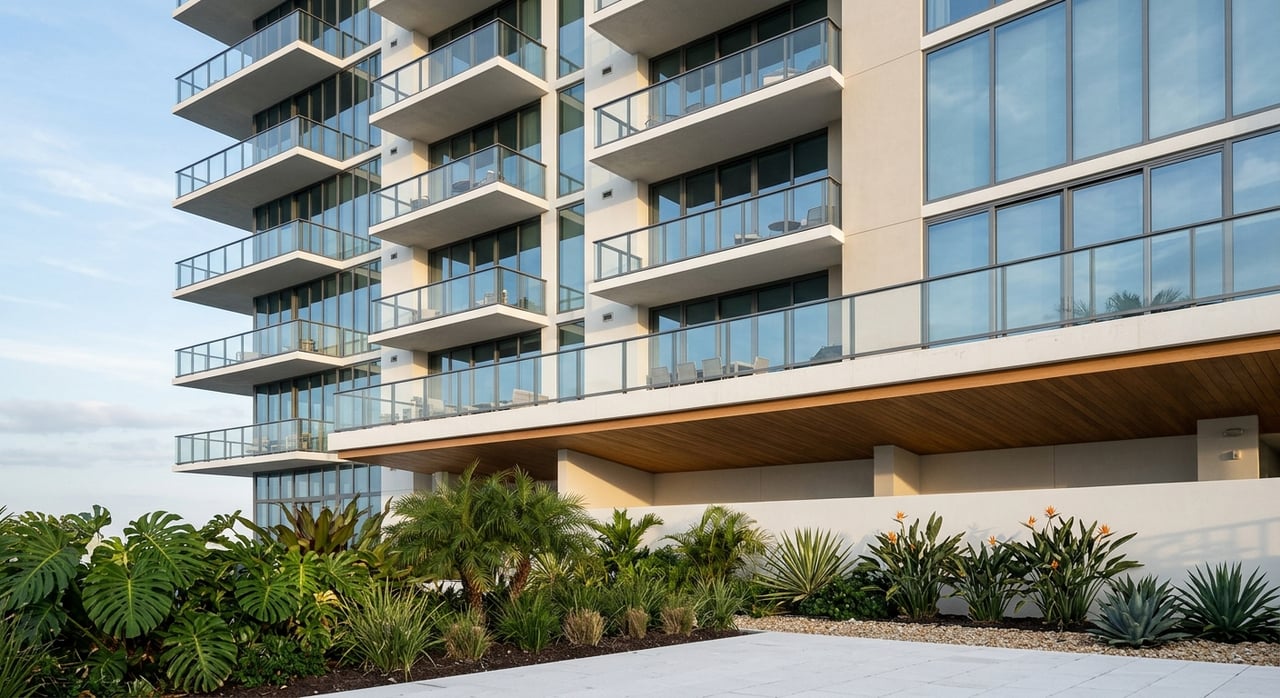
What Boutique Developers Need in a Miami Condo Project Sales Partner
Launching a boutique condominium in Miami is not just about putting a polished product on the market. In a supply-heavy environment, the right sales partner can shape your project's absorption pace, buyer reach, and long-term reputation. If you are planning a launch in Miami-Dade, you need more than sales coverage. You need a partner who can guide pricing, story, distribution, and buyer experience from pre-launch through closing. Let’s dive in.
Miami-Dade’s condo and townhouse market entered 2025 with 13.2 months of inventory, well above the 5.5-month balanced-market benchmark, according to the Miami Realtors Q1 2025 condo and townhouse report. The same report recorded 2,511 closed sales, a median sale price of $435,000, an average sale price of $815,604, and 53.0% cash sales.
For boutique developers, that market context matters. A sales partner should not approach your launch with a one-size-fits-all playbook. In a market with elevated supply and meaningful luxury activity, you should expect disciplined pricing, phased inventory release, and close attention to absorption, not just broad lead generation.
In Miami, established development-sales firms publicly position their role as a full-service platform that spans pre-launch, launch, post-launch, product development, pricing, inventory management, and on-site sales operations, along with global buyer access, as described by Cervera’s development sales and marketing overview. That is a useful benchmark for what a capable sales partner should deliver.
For a boutique project, this means your partner should help shape the product before the first appointment is booked. That includes refining the buyer story, supporting pricing strategy, helping organize release cadence, and ensuring your marketing and sales process work together. Opening a sales gallery is only one part of the job.
Boutique projects often compete on identity, detail, and lifestyle rather than scale alone. That makes product storytelling one of the most important parts of the launch process. Your sales partner should be able to translate architecture, interiors, amenities, and ownership use into a clear buyer narrative.
This is especially important in a market where buyers may compare your project against a large pool of resale and new-construction options. A strong partner should know how to position what makes your residences distinct, whether that is privacy, turnkey living, waterfront access, branded design, rental flexibility, or lock-and-leave convenience.
Today’s buyer often forms an impression long before an in-person visit. The National Association of Realtors advises that online listings should include photos, video, virtual tours, and floor plans, and notes that narrative descriptions help buyers imagine how they will live in a property.
For boutique developers, that sets a clear expectation. Your sales partner should deliver rich visual assets, polished presentation, and marketing that helps buyers understand both layout and lifestyle. This is not just a design choice. It directly supports engagement, especially when buyers are remote, international, or making decisions quickly.
Miami is not a local-only launch market. It is a global one. Miami Realtors reported that Miami-Dade posted the nation’s highest net international migration in the year ending July 1, 2024. The same source notes that Florida remained the top destination for foreign buyers in the 2025 NAR international report, while South Florida captured 10% of all international home sales in the United States and Miami-Dade represented 65% of South Florida’s foreign-buyer volume.
That means a boutique developer should expect a sales partner with meaningful cross-border reach. In Miami, international demand is not a side channel. It is a core part of the buyer pool, especially for premium condominium product.
Not every Miami submarket performs the same way, and your sales strategy should reflect that. In the June 2025 new-construction report from Miami Realtors, international buyers represented 49% of sales across 9,115 units in 37 projects. Latin American buyers accounted for 86% of global buyers.
The same report showed major corridor differences. Latin Americans represented 99% of international buyers in Downtown Miami, 79% in Brickell, and 77% in Miami Beach. For developers, this means bilingual, culturally informed outreach is not optional in these submarkets. A sales partner should know how to tailor messaging, appointment flow, and follow-up based on where the project sits and who is most likely to buy there.
South Florida’s foreign-buyer profile offers useful guidance for launch strategy. According to Miami Realtors’ international buyer report, 66% of international transactions were all-cash, 56% of foreign buyers preferred condos, and 64% preferred central or urban locations. The same report found that 76% intended to use the property as a rental, vacation home, or both, and 52% purchased after two visits or fewer.
That has real implications for your sales operation. Your sales partner should be prepared with polished digital presentations, efficient appointment scheduling, multilingual communication, and a clear process for buyers who may move quickly. If many buyers decide after one or two visits, every interaction has to be sharp, informative, and easy to navigate.
Digital marketing matters, but relationship-driven business still plays a major role in international sales. The 2025 NAR international transactions report found that 72% of leads and referrals among agents working with foreign clients came from former clients, personal contacts, and former business contacts, while websites and online listings accounted for 15%.
For boutique developers, this is an important filter when evaluating potential sales representation. A strong Miami sales partner should offer more than ad spend and listing exposure. You should expect active relationship networks, repeat client channels, and trusted referral pathways that can reach qualified buyers beyond standard online traffic.
Many condo buyers in South Florida are not purchasing for one single use. As Miami Realtors reported, a large share of international buyers plan to use properties as rentals, vacation homes, or both.
That means your sales partner should be ready to speak clearly about the project’s rental posture and ownership flexibility. Buyers often want to understand how the property may fit their lifestyle and holding strategy after closing. For the right project, support that extends into leasing and property-management coordination can make the offering more compelling and more practical.
Cross-border transactions can introduce added complexity. Miami Realtors’ foreign-investor guide highlights issues such as FIRPTA withholding, fair housing obligations, Florida Chapter 692 restrictions for certain foreign nationals, and the need to coordinate with attorneys, CPAs, and immigration consultants while avoiding unauthorized practice of law. The guide also notes that foreign owners may still face taxes, insurance, rental-income reporting, maintenance, and property-management needs after closing.
A strong sales partner should understand where these issues affect the buyer journey and know how to coordinate the right professionals. That does not mean replacing legal or tax advisers. It means managing the process with care, setting realistic expectations, and helping buyers move through the transaction with confidence.
If you are hiring a Miami sales partner for a boutique launch, your expectations should be high. The right partner should bring together market discipline, polished presentation, international connectivity, and a refined buyer experience.
At a practical level, you should expect:
Large projects can sometimes rely on scale, visibility, and broad recognition. Boutique developments usually have less room for wasted momentum. Every release, showing, and buyer conversation carries more weight.
That is why the sales partner matters so much. In Miami’s current market, the strongest partner is not just a listing conduit. It is a strategic extension of the development team that can help translate a well-designed product into a well-executed sales outcome.
For developers who value white-glove service, development-level storytelling, polished digital presentation, and concierge-style execution, working with a boutique-minded firm can create a more aligned launch process. If you are planning a project in Miami-Dade and want a more tailored, high-touch approach to development marketing, Dianna Lantigua Realty Inc offers private consultations designed around premium condominium positioning, international buyer engagement, and refined project representation.
Whether guiding buyers through South Florida’s most prestigious neighborhoods or representing seasoned investors, she ensures a seamless experience defined by privacy, professionalism, and personalized attention.
Dianna Lantigua
17121 COLLINS AVE SUNNY ISLES BEACH FL 33160