How To Evaluate Amenities In Miami Beach Condo Towers
Buying in Miami Beach can make almost any condo tower look impressive at first glance. Rooftop pools, spa suites, beach service, and concierge desks all sound appealing, especially when you are searching for a second home, a seasonal residence, or an investment property. But in this market, the smartest way to evaluate amenities is not to ask which building has the longest list. It is to ask which features will actually improve how you live, use, or hold the property. Let’s dive in.
One of the biggest mistakes buyers make is paying a premium for amenities that mostly duplicate what Miami Beach already offers. The city provides a strong public waterfront baseline, including a 7-mile beach with staffed lifeguard stands and flag warnings, public pools at Flamingo Park and Normandy Isles, and the Miami Beach Beachwalk, a nine-mile oceanfront promenade with restrooms, water fountains, playgrounds, and nearby parking.
That matters because private condo amenities should add something beyond basic access. In Miami Beach, the most valuable tower features usually deliver convenience, privacy, staffing, or exclusivity. If a building’s headline amenity is simply “beach access,” you should look more closely at what that really means in day-to-day use.
The best amenities are the ones that reduce friction. In Miami Beach, that often means making your beach day easier, your arrival smoother, your building more private, or your ownership experience more predictable.
A beautiful amenity package can still underperform if it does not match your actual goals. If you want a turnkey second home, valet, concierge support, package handling, and a controlled arrival experience may matter more than a large resident lounge you rarely use. If you plan to lease the property, operational ease may matter just as much as visual appeal.
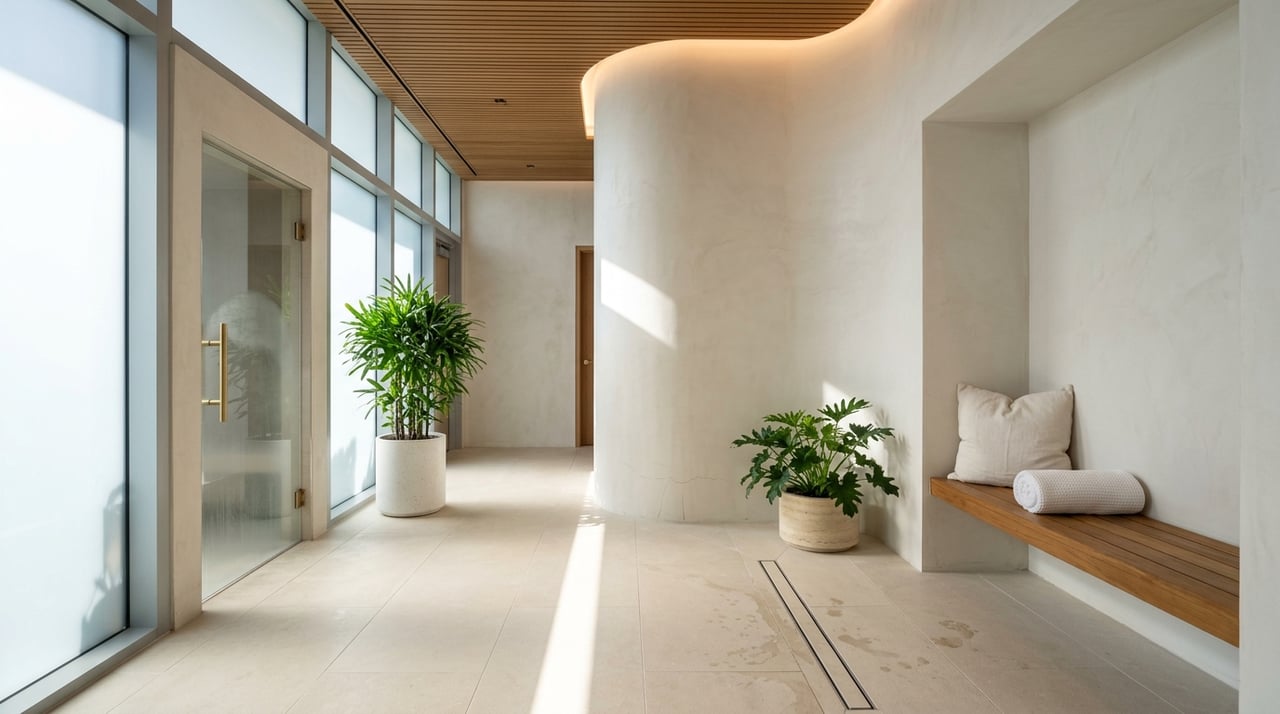
Wellness is one of the clearest ways Miami Beach condo towers differentiate themselves. Project pages for 57 Ocean, Five Park, and Faena highlight private spa spaces, treatment or thermal areas, wellness programming, and in some cases yoga or meditation offerings.
For many buyers, these amenities support lifestyle enjoyment first. A standard fitness room may check a box, but a thoughtfully designed wellness floor can change how often you actually use the building and how self-contained your daily routine feels.
Not all spa and fitness amenities deliver equal value. You should ask whether the wellness spaces are resident-only, how they are staffed, and whether programming is included or limited.
A polished brochure may show a serene treatment room or oceanfront yoga deck, but the real value comes from how accessible and consistent those amenities are. In a luxury building, practical details often matter more than the rendering.
In Miami Beach, everyone already has access to the shoreline. That is why a private beach club has to offer more than a path to the sand.
Five Park promotes a private beach club in SoFi with concierge and butler service, while Faena notes that penthouse residents receive priority access to the hotel’s pool and beach club. In each case, the premium is not the beach itself. It is the easier setup, added service, and more controlled guest experience.
When you compare beach club amenities, ask direct questions. Does the building provide chairs, umbrellas, food and beverage service, attendants, transportation, or reserved areas?
These details shape whether the amenity feels truly elevated or simply sounds elevated. In a market with strong public beach infrastructure, service is often what creates the real difference.
In many Miami Beach luxury towers, service and privacy can be more meaningful than the total amenity count. The Ritz-Carlton Residences highlights concierge services such as in-residence dining, reservations, valet parking, and package delivery. Ocean Terrace emphasizes a private residential porte-cochère and privacy, while Faena’s penthouse residences include a dedicated interior elevator and staircase.
These features may not photograph as dramatically as a rooftop deck, but they can have a major impact on how ownership feels. If you are using the property seasonally or arriving with guests, luggage, or deliveries, a smooth arrival sequence can become one of your most-used amenities.
Some buyers want a highly social building. Others want discretion, low-friction service, and a quieter ownership experience.
That is why privacy should be part of your amenity review. Separate entrances, resident-only access points, controlled elevator service, and lower-density layouts can all contribute to the kind of lifestyle many luxury condo buyers in Miami Beach value most.
If you are buying a second home, think about ease and comfort first. Amenities that support frequent short stays often include:
These features can make the residence feel turnkey. They also support the kind of effortless use many seasonal owners want.
If your goal is income, start with legal use before you evaluate lifestyle features. Miami Beach states that vacation and short-term rentals are prohibited in all single-family homes and in many multi-family buildings in certain zoning districts. Approved rentals require proper zoning approval, a Business Tax Receipt, a Resort Tax account, and permitted listings must display those numbers. The city also requires a letter from the association confirming that short-term rentals are allowed for the specific unit.
That means an attractive amenity package does not automatically make a building a strong fit for your rental strategy. If the building or zoning does not support the lease structure you want, the amenity list will not change the economics.
A tower can have a beautiful spa, strong concierge service, and an impressive pool deck while still being a poor match for short-term or seasonal leasing. Where rentals are allowed, the most useful operational features are often front-desk coverage, valet, package handling, and easy beach access because they reduce friction for occupants.
For investor-minded buyers, the key question is not just “How luxurious is this building?” It is “How does this building operate, and does that operation support my intended use?”
Amenities do not exist in a vacuum. In Miami Beach, a dramatic amenity deck, expansive common areas, and service-heavy operations can also increase maintenance needs, reserves, and long-term ownership costs.
Miami Beach states that commercial and multifamily buildings built on or after 1993 must be recertified at 30 years and every 10 years after that. Miami-Dade County states that condominium and cooperative buildings within three miles of the coastline that were built on or after 1998 are recertified at 25 years and every 10 years thereafter. Florida law also requires residential condominium associations with buildings three habitable stories or higher to complete a structural integrity reserve study at least every 10 years, and current sales contracts must include the applicable milestone inspection and SIRS disclosures.
A buyer may see a glamorous pool deck, large spa, or expansive facade and think only about enjoyment. You should also think about upkeep, reserve funding, and planned capital work.
In practical terms, that means monthly fees and building condition deserve as much attention as the amenity brochure. In Miami Beach, amenity quality and building quality are often financially linked.
Miami Beach is not one-size-fits-all. Different parts of the city tend to emphasize different amenity experiences.
Buildings such as Five Park and the Ritz-Carlton Residences emphasize concierge support, butler-style service, beach-club access, privacy, and low-friction arrivals. This type of setup often appeals to buyers who want a hotel-like experience and seasonal ease.
Projects such as 57 Ocean and Faena lean more heavily into spa, wellness, and resort-style daily programming. These buildings can be a fit for buyers who want a more immersive, stay-in-place luxury experience.
Ocean Terrace presents a different version of luxury, pairing a private club and private arrival sequence with parkland and oceanfront openness. For some buyers, this approach offers a stronger sense of space and privacy than denser South Beach towers.
Marketing materials can be helpful, but they should not be your only source. The Ritz-Carlton Residences legal disclaimer notes that sketches, renderings, services, and amenities are proposed only and may change, and that buyers should rely on the prospectus and other required documents.
That is an important reminder in any pre-construction or hotel-branded purchase. The amenity review should include both the lifestyle pitch and the legal documents.
Use this checklist as part of your condo review process:
A well-chosen amenity package should support your actual priorities, not just impress you during a tour.
The right Miami Beach condo amenities are rarely about excess alone. They are about whether the building makes daily life easier, ownership smoother, and your use of the property more enjoyable.
When you evaluate a tower through that lens, you are more likely to choose features that hold value over time. In this market, that usually means a better beach experience, stronger privacy, easier arrivals, legally clear rental use, and a more predictable ownership picture.
If you want help comparing Miami Beach condo towers with a sharper eye on amenities, operations, and long-term fit, Dianna Lantigua Realty Inc offers a discreet, concierge-level approach tailored to luxury condo buyers, seasonal owners, and investors.
Whether guiding buyers through South Florida’s most prestigious neighborhoods or representing seasoned investors, she ensures a seamless experience defined by privacy, professionalism, and personalized attention.
Dianna Lantigua
17121 COLLINS AVE SUNNY ISLES BEACH FL 33160